La inteligencia artificial y el futuro de la profesión jurídica
implicaciones para la formación jurídica en Vietnam
DOI:
https://doi.org/10.22633/rpge.v30iesp2.21370Palabras clave:
Inteligencia Artificial, Educación jurídica, Transformación digital, Capacitación jurídica, VietnamResumen
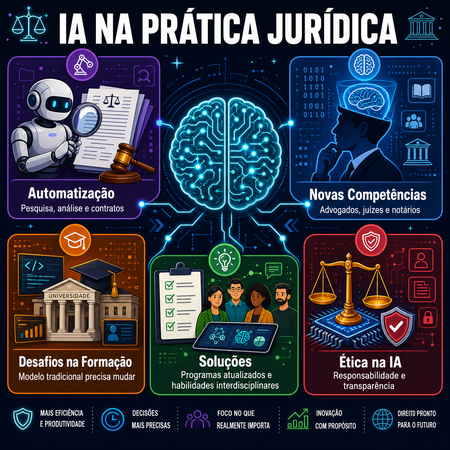
El rápido desarrollo de la Inteligencia Artificial (IA) está generando cambios profundos en muchas áreas de la vida socioeconómica, incluida la profesión jurídica. La IA no solo automatiza muchas actividades jurídicas tradicionales, como la búsqueda de jurisprudencia, el análisis de textos legales, la redacción de contratos y la predicción de los resultados de los litigios, sino que también transforma el conjunto de habilidades y las funciones profesionales de los abogados, jueces, notarios y otros profesionales del derecho. En este contexto, la educación jurídica necesita ajustes adecuados para preparar a los estudiantes para adaptarse al nuevo entorno profesional. Este artículo analiza el impacto de la IA en la práctica jurídica e identifica las tendencias de cambio en el mercado laboral jurídico. Con base en ello, el artículo evalúa los desafíos que enfrenta el modelo tradicional de educación jurídica. Propone varias líneas de innovación para la educación jurídica en Vietnam, entre ellas la actualización de los programas de capacitación, el fortalecimiento de las habilidades interdisciplinarias, la mejora de las capacidades digitales y la sensibilización sobre la ética y la responsabilidad jurídica en el uso de la IA
Descargas
Referencias
Balan, A. (2024). AI and legal education: Ethical and sustainable approaches. Routledge.
Bucher, A. (2025). Navigating the power of artificial intelligence in the legal field. Houston Law Review, 62(4), 819–842.
Carrel, A. (2019). Legal intelligence through artificial intelligence requires emotional intelligence: A new competency model for the 21st-century legal professional. Georgia State University Law Review, 35(4), 1153–1183.
Clio. (2026). 2025 Clio legal trends report. https://www.clio.com/resources/legal-trends/read-online/
Flynn, S. (2019, September 26). Melbourne Law School offers a law tech design pop-up course. Artificial Lawyer. https://www.artificiallawyer.com/2019/09/26/melbourne-law-school-offers-law-tech-design-pop-up-course/
Ho, H. B. T. (2025). Law students and artificial intelligence in legal research. Russin & Vecchi. https://www.russinvecchi.com.vn/publication/sinh-vien-luat-va-tri-tue-nhan-tao-trong-nghien-cuu-phap-luat/
Le, T. M. (2026). Vietnam’s first standalone AI law: An overview of key provisions and future implications. International Association of Privacy Professionals. https://iapp.org/news/a/vietnam-s-first-standalone-ai-law-an-overview-of-key-provisions-future-implications
Eliadi, M. (2025). The T-shaped lawyer: A new model for corporate legal excellence. Axiom Law. https://www.axiomlaw.com/blog/t-shaped-lawyer-model-for-corporate-legal-excellence
Melbourne Law School. (2026). Technology, innovation, design, and the law at MLS. https://law.unimelb.edu.au/about/technology-innovation-and-the-law
Miller, K. W. (2026). The 15 best legal AI software tools for 2025. Ironclad. https://ironcladapp.com/resources/articles/best-legal-ai-software
Moppett, S. A. (2025). Preparing students for the artificial intelligence era: The crucial role of critical thinking skills. Mitchell Hamline Law Review, 52(1), Article 7.
Morris, I. (2025, March 24). 7 ways AI is changing law school & legal careers. The Colleges of Law. https://www.collegesoflaw.edu/blog/2025/03/24/7-ways-artificial-intelligence-is-already-changing-law-school-and-legal-careers/
Nguyen, D. T. T. (2025). Legal education in the digital era: Theoretical and practical issues. Hanoi Open University Journal of Science, (9A). https://doi.org/10.59256/houjs.2025.1029
Nguyen, L., & Dinh, H. (2023). Foreign Trade University: Combining training with practice for law students. Dai Bieu Nhan Dan Newspaper. https://daibieunhandan.vn/truong-dh-ngoai-thuong-ket-hop-dao-tao-voi-thuc-hanh-cho-sinh-vien-nganh-luat-10324276.html
Nguyen, T. T. H., & Do, T. D. L. (2025). Legal education in the context of digital technology development. Vietnam Lawyers Journal. https://lsvn.vn/dao-tao-cu-nhan-luat-trong-boi-canh-phat-trien-cong-nghe-so-a164255.html
OECD. (2021). Artificial intelligence in society. OECD Publishing.
Richter, M. (2025). How AI is transforming the legal profession. Thomson Reuters. https://legal.thomsonreuters.com/blog/how-ai-is-transforming-the-legal-profession/
Singapore Management University. (2026a). Centre for AI & Data Governance (2019–2025). https://ink.library.smu.edu.sg/caidg/
Singapore Management University. (2026b). Generative artificial intelligence (AI) guidance. https://www.smu.edu/oit/ai
Susskind, R. (2022). Tomorrow’s lawyers: An introduction to your future (3rd ed.). Oxford University Press.
Tran, V. (2025). The Ministry of Education and Training promulgates the undergraduate legal education curriculum. Vietnam Lawyers Electronic Journal. https://lsvn.vn/bo-gd-dt-ban-hanh-chuong-trinh-dao-tao-linh-vuc-phap-luat-trinh-do-dai-hoc-a155121.html
Tran, V. N., & Pham, T. N. (2021). Strengthen the training skills of law practice at the higher education level in Vietnam. International Journal of Legal Studies, 2(10), 233–242. https://doi.org/10.5281/zenodo.5866018
UNESCO. (2021). Recommendation on the ethics of artificial intelligence (SHS/BIO/PI/2021/1).
Vanderbilt Law School. (2026, March 5). How AI is impacting the legal profession. https://law.vanderbilt.edu/master-legal-studies/articles/how-is-ai-impacting-the-legal-profession/
Wachter, S. (2020). Responsibility in AI: Ethics and the future of education. Technology and Education Review, 9(2), 22–33.
Descargas
Publicado
Número
Sección
Licencia
Derechos de autor 2026 Revista on line de Política e Gestão Educacional

Esta obra está bajo una licencia internacional Creative Commons Atribución-NoComercial-CompartirIgual 4.0.
Manuscritos aceitos e publicados são de propriedade da Revista on line de Política e Gestão Educacional. É vedada a submissão integral ou parcial do manuscrito a qualquer outro periódico. A responsabilidade do conteúdo dos artigos é exclusiva dos autores. É vedada a tradução para outro idioma sem a autorização escrita do Editor ouvida a Comissão Editorial Científica.