El fenómeno de la felicidad en el sistema de valores psicológicos de los jóvenes estudiantes
DOI:
https://doi.org/10.22633/rpge.v30iesp2.21387Palabras clave:
Felicidad, Experimento de asociación libre, Juventud estudiantil, Orientación hedónica, Bienestar psicológicoResumen
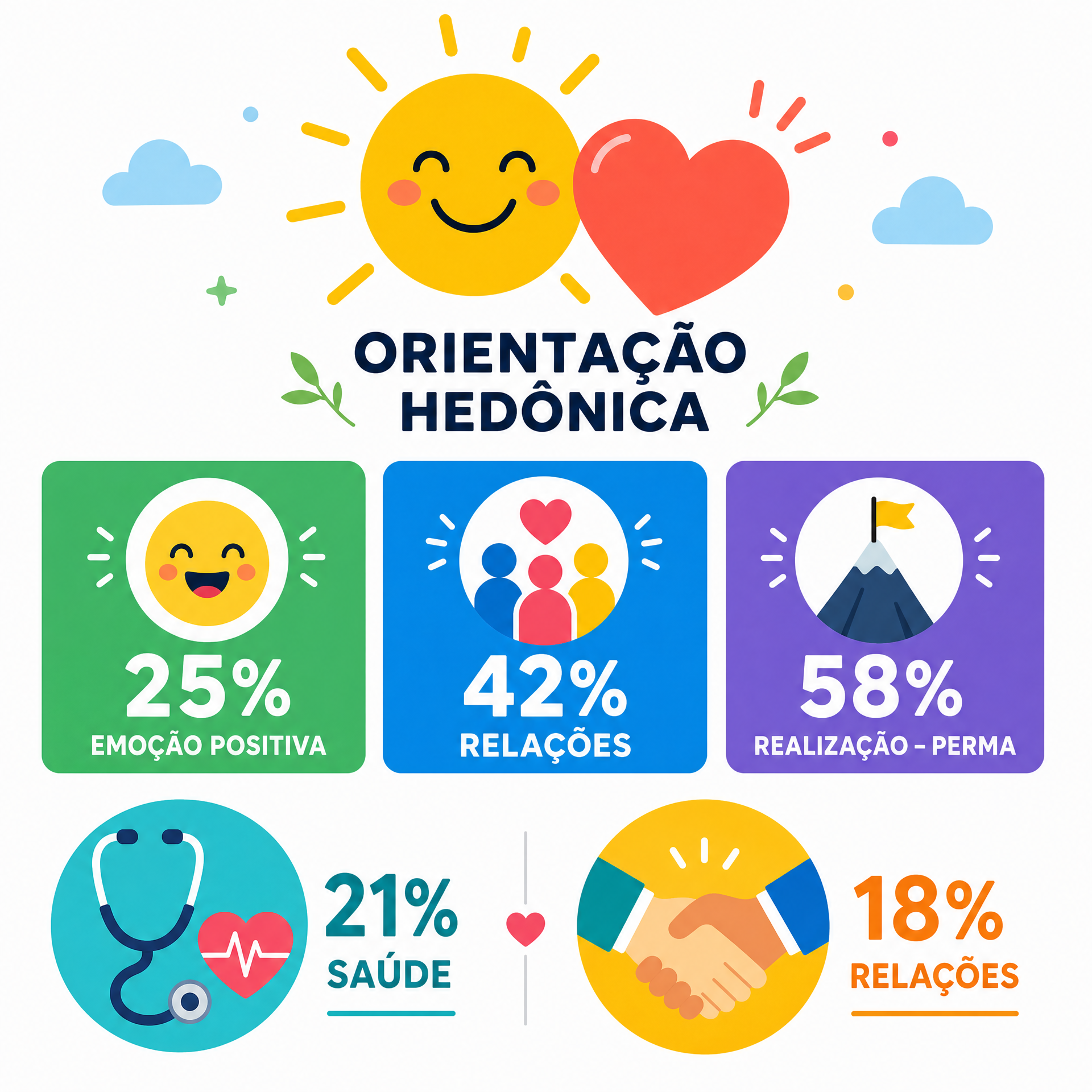
El artículo presenta un análisis teórico y una generalización de los enfoques para la definición de la felicidad en el sistema de valores sociopsicológicos de la juventud estudiantil y fundamenta su papel en la autorrealización. Un experimento empírico en el que participaron estudiantes de la Universidad Nacional de Cultura y Artes de Kiev, la Universidad Nacional «V. I. Vernadsky» de Taurida y la Universidad Estatal «Iván Franko» de Jítomir reveló los principales componentes de valor de la experiencia de la felicidad. Los resultados mostraron un predominio de la orientación hedónica en la percepción de la felicidad. Concretamente, el 25 % de los encuestados definió la felicidad como un estado emocional positivo, el 42 % declaró una alta satisfacción en «Relaciones» y el 58 % mostró un nivel medio de satisfacción en «Logros» según el modelo PERMA. La salud se identificó como el factor más importante (21 %), seguida de las relaciones interpersonales (18 %). Los hallazgos ponen de relieve oportunidades de aplicación en la práctica educativa universitaria, en particular el desarrollo de programas de inteligencia emocional y resiliencia psicológica para mejorar el bienestar de los estudiantes.
Descargas
Referencias
Bianko, O. (2017). The phenomenon of happiness in positive psychology: Analysis and problematic aspects of concept application. Humanitarium, 39(1), 15–22.
Chen, H., & Zeng, Z. (2022). Associations of hedonic and eudaimonic orientations with subjective experience and objective functioning in academic settings: The mediating roles of academic behavioral engagement and procrastination. Frontiers in Psychology, 13, Article 948768. https://doi.org/10.3389/fpsyg.2022.948768
Csikszentmihalyi, M. (1988). The flow experience and its significance for human psychology. In M. Csikszentmihalyi & I. S. Csikszentmihalyi (Eds.), Optimal experience: Psychological studies of flow in consciousness (pp. 15–35). Cambridge University Press.
Csikszentmihalyi, M., & Nakamura, J. (1999). Emerging goals and the self-regulation of behavior. In R. Wyer (Ed.), Advances in social cognition (Vol. 12, pp. 107–118). Erlbaum.
Drobot, O. V. (2024). Development of modern psychological education in the cognitive direction of teaching scientific disciplines. Scientific Perspectives: Journal: Psychology, 7(49), 1180–1191. https://doi.org/10.52058/2708-7530-2024-7(49)-1180-1191
García, H., & Miralles, F. (2017). Ikigai: The Japanese secret for a long and happy life (H. Cleary, Trans.). Penguin.
Helliwell, J. F., Layard, R., Sachs, J. D., De Neve, J.-E., Aknin, L. B., & Wang, S. (Eds.). (2024). World happiness report 2024. University of Oxford.
Hernández-Torrano, D., & Tursunbayeva, X. (2026). The structure of emerging adults' well-being: A psychological network approach of hedonic and eudaimonic dimensions. Journal of Happiness Studies, 27, Article 38. https://doi.org/10.1007/s10902-025-00994-1
Hobbs, C., Armitage, J., Hood, B., & Jelbert, S. (2022). A systematic review of the effect of university positive psychology courses on student psychological wellbeing. Frontiers in Psychology, 13, Article 1023140. https://doi.org/10.3389/fpsyg.2022.1023140
Hryniv, O. (2014). Analysis of approaches to the study of psychological well-being of a personality. Collection of Scientific Papers: Philosophy, Sociology, Psychology, 19(1), 25–34.
Irkhin, Y. B., Bielavina, T. I., Kostiuchenko, O. V., Bryl, M. M., Orlovska, O. A., & Bila, I. M. (2021). Actitudes disfuncionales en el panorama general del bienestar psicológico. Apuntes Universitarios, 12(1), 316–334. https://doi.org/10.17162/au.v12i1.972
Kyiv International Institute of Sociology. (2024). Dynamics of self-assessed happiness among the Ukrainian population from 2001 to 2024 [Press release]. KIIS. https://kiis.com.ua/?cat=reports&id=1508&lang=ukr&page=2
Kostiuchenko, O. V. (2022). Perceptual components of happiness. In The Ukrainian Institute of Happiness Research (Ed.), Proceedings of the third international scientific conference “Happiness and contemporary society” (pp. 115–118). SPOLOM. https://doi.org/10.31108/7.2022.21
Kostiuchenko, O. V. (2023). Value orientations as the basis of the experience of happiness. In Proceedings of the fourth international scientific conference “Happiness and contemporary society” (pp. 139–144). SPOLOM.
Kostiuchenko, O. V., & Bryl, M. M. (2020). The psycholinguistic characteristics identified at students’ value orientations by the means of metaphor. Psychological Journal, 6(8), 9–23. https://doi.org/10.31108/1.2020.6.8.1
Kovich, M., Simpson, V. L., Foli, K. J., Hass, Z., & Phillips, R. G. (2023). Application of the PERMA model of well-being in undergraduate students. International Journal of Community Well-Being, 6(1), 1–20. https://doi.org/10.1007/s42413-022-00184-4
Maslow, A. H. (1954). Motivation and personality. Harper & Row.
Mota, E., Brandão, T., & Remondes-Costa, S. (2023). Understanding happiness among university students: The role of general health, psychological well-being, and sociodemographic variables. Mediterranean Journal of Clinical Psychology, 11(1), 1–14. https://doi.org/10.13129/2282-1619/mjcp-3589
Nakamura, J., & Csikszentmihalyi, M. (2003). The construction of meaning through vital engagement. In C. L. M. Keyes & J. Haidt (Eds.), Flourishing: Positive psychology and the life well-lived (pp. 83–104). American Psychological Association.
Nakamura, J., & Csikszentmihalyi, M. (2020). The experience of flow. In S. J. Lopez & C. R. Snyder (Eds.), Oxford handbook of positive psychology (3rd ed., pp. 195–206). Oxford University Press. https://doi.org/10.1093/oxfordhb/9780199396511.013.16
Prosandieieva, L. Ie. (2013). Value in the mental being of a person. Current Issues in Psychology, 12(16), 391–397.
Prosandieieva, L. Ie. (2021). Genesis of personal self-value in the process of socialization. NAKKKIM.
Seligman, M. E. P. (2002). Authentic happiness: Using the new positive psychology to realize your potential for lasting fulfillment. Free Press.
Seligman, M. E. P., & Adler, A. (2019). Positive education. In Global Council for Happiness and Wellbeing (Eds.), Global happiness and wellbeing policy report 2019 (pp. 52–71). Sustainable Development Solutions Network.
Waldinger, R., & Schulz, M. (2023). The good life. Simon & Schuster.
Descargas
Publicado
Número
Sección
Licencia
Derechos de autor 2026 Revista on line de Política e Gestão Educacional

Esta obra está bajo una licencia internacional Creative Commons Atribución-NoComercial-CompartirIgual 4.0.
Manuscritos aceitos e publicados são de propriedade da Revista on line de Política e Gestão Educacional. É vedada a submissão integral ou parcial do manuscrito a qualquer outro periódico. A responsabilidade do conteúdo dos artigos é exclusiva dos autores. É vedada a tradução para outro idioma sem a autorização escrita do Editor ouvida a Comissão Editorial Científica.