The phenomenon of happiness in the psychological value system of young students
DOI:
https://doi.org/10.22633/rpge.v30iesp2.21387Keywords:
Happiness, Free-associative Experiment, Student Youth, Hedonic Orientation, Psychological Well-beingAbstract
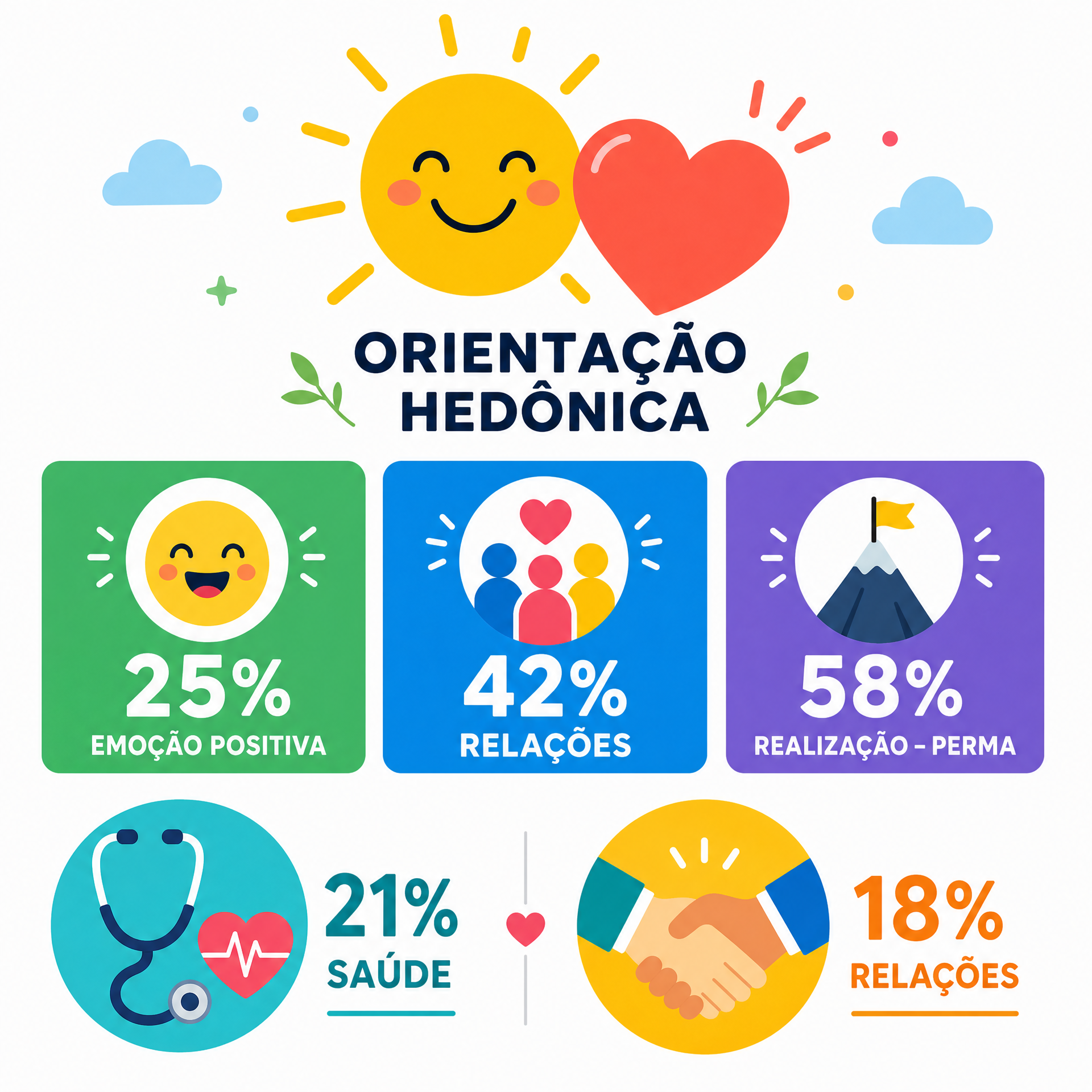
The article presents theoretical analysis and generalization of approaches to the definition of happiness in the system of socio-psychological values of student youth and substantiates its role in self-realisation. An empirical experiment involving students of Kyiv National University of Culture and Arts, V. I. Vernadsky Taurida National University and Zhytomyr Ivan Franko State University revealed the main value components of experiencing happiness. The results showed a predominance of a hedonic orientation in the perception of happiness. Specifically, 25% of respondents defined happiness as a positive emotional state, 42% reported high satisfaction in “Relationships,” and 58% demonstrated an average level of satisfaction in “Achievement” according to the PERMA model. Health was identified as the most important factor (21%), followed by interpersonal relationships (18%). The findings highlight opportunities for application in university educational practice, particularly the development of emotional intelligence and psychological resilience programs to improve students’ well-being.
Downloads
References
Bianko, O. (2017). The phenomenon of happiness in positive psychology: Analysis and problematic aspects of concept application. Humanitarium, 39(1), 15–22.
Chen, H., & Zeng, Z. (2022). Associations of hedonic and eudaimonic orientations with subjective experience and objective functioning in academic settings: The mediating roles of academic behavioral engagement and procrastination. Frontiers in Psychology, 13, Article 948768. https://doi.org/10.3389/fpsyg.2022.948768
Csikszentmihalyi, M. (1988). The flow experience and its significance for human psychology. In M. Csikszentmihalyi & I. S. Csikszentmihalyi (Eds.), Optimal experience: Psychological studies of flow in consciousness (pp. 15–35). Cambridge University Press.
Csikszentmihalyi, M., & Nakamura, J. (1999). Emerging goals and the self-regulation of behavior. In R. Wyer (Ed.), Advances in social cognition (Vol. 12, pp. 107–118). Erlbaum.
Drobot, O. V. (2024). Development of modern psychological education in the cognitive direction of teaching scientific disciplines. Scientific Perspectives: Journal: Psychology, 7(49), 1180–1191. https://doi.org/10.52058/2708-7530-2024-7(49)-1180-1191
García, H., & Miralles, F. (2017). Ikigai: The Japanese secret for a long and happy life (H. Cleary, Trans.). Penguin.
Helliwell, J. F., Layard, R., Sachs, J. D., De Neve, J.-E., Aknin, L. B., & Wang, S. (Eds.). (2024). World happiness report 2024. University of Oxford.
Hernández-Torrano, D., & Tursunbayeva, X. (2026). The structure of emerging adults' well-being: A psychological network approach of hedonic and eudaimonic dimensions. Journal of Happiness Studies, 27, Article 38. https://doi.org/10.1007/s10902-025-00994-1
Hobbs, C., Armitage, J., Hood, B., & Jelbert, S. (2022). A systematic review of the effect of university positive psychology courses on student psychological wellbeing. Frontiers in Psychology, 13, Article 1023140. https://doi.org/10.3389/fpsyg.2022.1023140
Hryniv, O. (2014). Analysis of approaches to the study of psychological well-being of a personality. Collection of Scientific Papers: Philosophy, Sociology, Psychology, 19(1), 25–34.
Irkhin, Y. B., Bielavina, T. I., Kostiuchenko, O. V., Bryl, M. M., Orlovska, O. A., & Bila, I. M. (2021). Actitudes disfuncionales en el panorama general del bienestar psicológico. Apuntes Universitarios, 12(1), 316–334. https://doi.org/10.17162/au.v12i1.972
Kyiv International Institute of Sociology. (2024). Dynamics of self-assessed happiness among the Ukrainian population from 2001 to 2024 [Press release]. KIIS. https://kiis.com.ua/?cat=reports&id=1508&lang=ukr&page=2
Kostiuchenko, O. V. (2022). Perceptual components of happiness. In The Ukrainian Institute of Happiness Research (Ed.), Proceedings of the third international scientific conference “Happiness and contemporary society” (pp. 115–118). SPOLOM. https://doi.org/10.31108/7.2022.21
Kostiuchenko, O. V. (2023). Value orientations as the basis of the experience of happiness. In Proceedings of the fourth international scientific conference “Happiness and contemporary society” (pp. 139–144). SPOLOM.
Kostiuchenko, O. V., & Bryl, M. M. (2020). The psycholinguistic characteristics identified at students’ value orientations by the means of metaphor. Psychological Journal, 6(8), 9–23. https://doi.org/10.31108/1.2020.6.8.1
Kovich, M., Simpson, V. L., Foli, K. J., Hass, Z., & Phillips, R. G. (2023). Application of the PERMA model of well-being in undergraduate students. International Journal of Community Well-Being, 6(1), 1–20. https://doi.org/10.1007/s42413-022-00184-4
Maslow, A. H. (1954). Motivation and personality. Harper & Row.
Mota, E., Brandão, T., & Remondes-Costa, S. (2023). Understanding happiness among university students: The role of general health, psychological well-being, and sociodemographic variables. Mediterranean Journal of Clinical Psychology, 11(1), 1–14. https://doi.org/10.13129/2282-1619/mjcp-3589
Nakamura, J., & Csikszentmihalyi, M. (2003). The construction of meaning through vital engagement. In C. L. M. Keyes & J. Haidt (Eds.), Flourishing: Positive psychology and the life well-lived (pp. 83–104). American Psychological Association.
Nakamura, J., & Csikszentmihalyi, M. (2020). The experience of flow. In S. J. Lopez & C. R. Snyder (Eds.), Oxford handbook of positive psychology (3rd ed., pp. 195–206). Oxford University Press. https://doi.org/10.1093/oxfordhb/9780199396511.013.16
Prosandieieva, L. Ie. (2013). Value in the mental being of a person. Current Issues in Psychology, 12(16), 391–397.
Prosandieieva, L. Ie. (2021). Genesis of personal self-value in the process of socialization. NAKKKIM.
Seligman, M. E. P. (2002). Authentic happiness: Using the new positive psychology to realize your potential for lasting fulfillment. Free Press.
Seligman, M. E. P., & Adler, A. (2019). Positive education. In Global Council for Happiness and Wellbeing (Eds.), Global happiness and wellbeing policy report 2019 (pp. 52–71). Sustainable Development Solutions Network.
Waldinger, R., & Schulz, M. (2023). The good life. Simon & Schuster.
Downloads
Published
How to Cite
Issue
Section
License
Copyright (c) 2026 Revista on line de Política e Gestão Educacional

This work is licensed under a Creative Commons Attribution-NonCommercial-ShareAlike 4.0 International License.
Manuscritos aceitos e publicados são de propriedade da Revista on line de Política e Gestão Educacional. É vedada a submissão integral ou parcial do manuscrito a qualquer outro periódico. A responsabilidade do conteúdo dos artigos é exclusiva dos autores. É vedada a tradução para outro idioma sem a autorização escrita do Editor ouvida a Comissão Editorial Científica.