Formación de la autorregulación mediante el kickboxing en el componente educativo “Protección de Ucrania”
DOI:
https://doi.org/10.22633/rpge.v30iesp2.21380Palabras clave:
Autorregulación, Kickboxing, Componente educativo “Protección de Ucrania”, Formación de especialistas, Educación físicaResumen
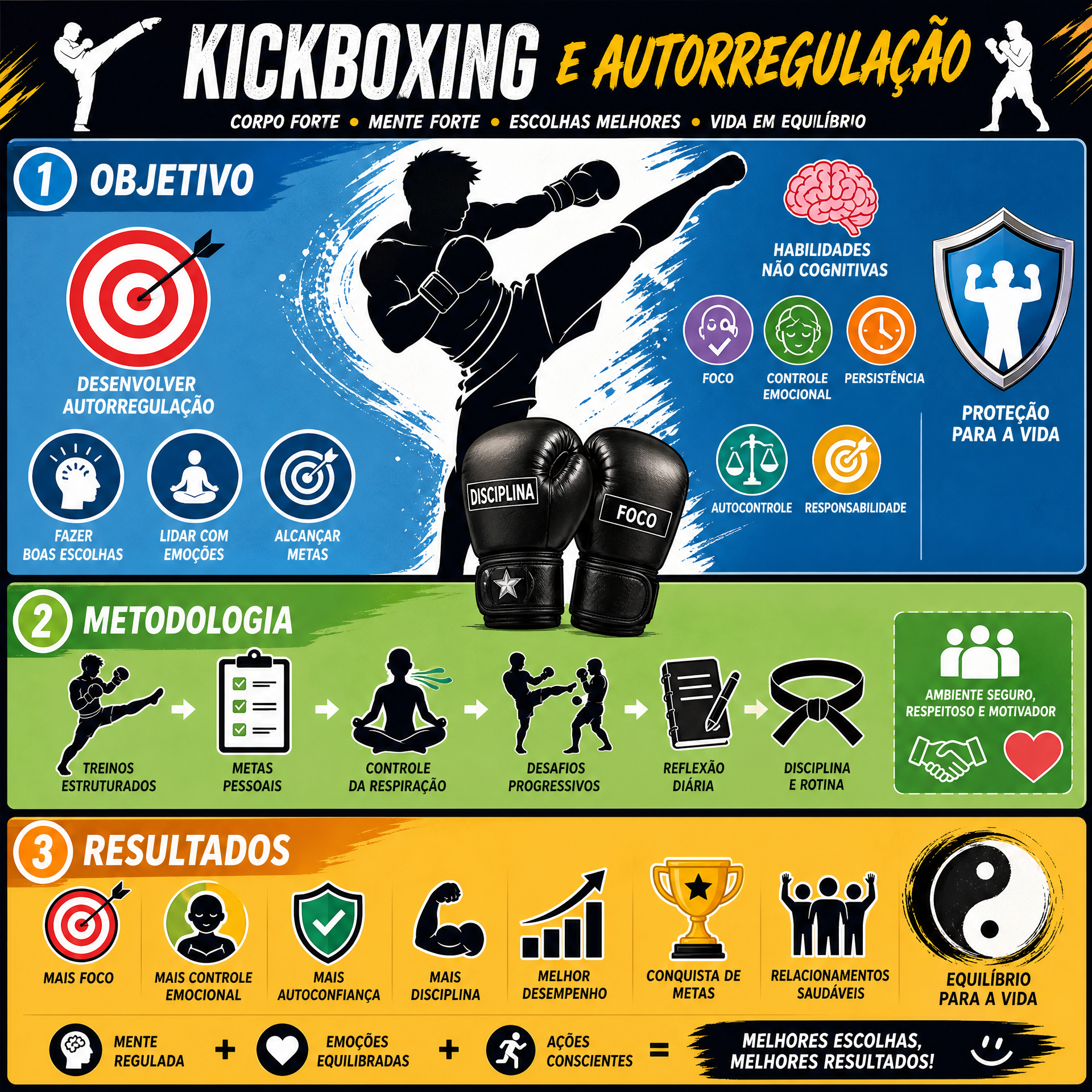
El objetivo del estudio es examinar la formación de la autorregulación mediante el kickboxing en el componente educativo “Protección de Ucrania”, en el contexto del desarrollo de habilidades no cognitivas. La base metodológica del estudio es un enfoque cuasiexperimental que utiliza técnicas psicodiagnósticas, observación pedagógica y análisis estadístico de los cambios en el nivel de autorregulación. Los resultados indican que el uso intencionado de elementos del kickboxing contribuye a un aumento estadísticamente significativo de la autorregulación de los estudiantes. El efecto es sistémico y se manifiesta en un aumento del autocontrol, la estabilidad de las reacciones y la disciplina. El estudio muestra que el kickboxing puede utilizarse como herramienta pedagógica en la educación física y en la formación de especialistas. Las posibles implicaciones económicas se tratan únicamente como una perspectiva indirecta para futuras investigaciones, ya que el empleo, los ingresos y la productividad no se midieron directamente.
Descargas
Citas
Ambroży, T., Rydzik, Ł., Obmiński, Z., Klimek, A. T., Serafin, N., Litwiniuk, A., Czaja, R., & Czarny, W. (2021). The impact of reduced training activity of elite kickboxers on physical fitness, body build, and performance during competitions. International Journal of Environmental Research and Public Health, 18(8), 4342. https://doi.org/10.3390/ijerph18084342
Bielikov, I. (2022). Pedagogical modeling of the formation of organizational competence in future specialists in physical culture and sports of the Armed Forces of Ukraine. ScienceRise: Pedagogical Education, 5(50), 4–8. https://doi.org/10.15587/2519-4984.2022.265102
Cabinet of Ministers of Ukraine. (2024). On approval of the state standard of profile secondary education (Resolution No. 851, July 25, 2024). https://zakon.rada.gov.ua/go/851-2024-%D0%BF
Chen, X., & Wu, X. (2025). Non-cognitive skills and earnings of informal workers in China. Economic Modelling, 149, 107106. https://doi.org/10.1016/j.econmod.2025.107106
Cheng, L., Qin, H., Yang, Y., & Dang, J. (2025). Exploring the effects of long-term physical exercise on persistent and inhibitory self-control: Quasi-experimental research. Frontiers in Sports and Active Living, 7, 1543481. https://doi.org/10.3389/fspor.2025.1543481
Choi, S., & Min, I. (2025). The impact of cognitive and non-cognitive skills on occupational outcomes: Evidence from Indonesia. International Journal of Educational Research, 133, 102669. https://doi.org/10.1016/j.ijer.2025.102669
De Paola, M., & Skatova, E. (2024). Non-cognitive skills and social isolation in late childhood: An investigation of their impact on school performance in Italy. Economics of Education Review, 103, 102581. https://doi.org/10.1016/j.econedurev.2024.102581
Deming, D. J. (2017). The growing importance of social skills in the labor market. The Quarterly Journal of Economics, 132(4), 1593–1640. https://doi.org/10.1093/qje/qjx022
Gea-García, G. M., González-Gálvez, N., Espeso-García, A., Marcos-Pardo, P. J., González-Fernández, F. T., & Martínez-Aranda, L. M. (2020). Relationship between the practice of physical activity and physical fitness in physical education students: The integrated regulation as a mediating variable. Frontiers in Psychology, 11, 1910. https://doi.org/10.3389/fpsyg.2020.01910
Glewwe, P., Song, Y., & Zou, X. (2022). Labor market outcomes, cognitive skills, and noncognitive skills in rural China. Journal of Economic Behavior & Organization, 193, 294–311. https://doi.org/10.1016/j.jebo.2021.11.021
Hernandez-Martinez, J., Cid-Calfucura, I., Guzmán-Muñoz, E., Herrera-Valenzuela, T., Delgado-Floody, P., Nuñez-Espinosa, C., Branco, B. M., Mota, J., Nobari, H., Perez-Carcamo, J., Vásquez-Carrasco, E., & Valdés-Badilla, P. (2025). Effects of Olympic combat sports on physical fitness in non-athlete students: A systematic review with meta-analysis. Frontiers in Physiology, 16, 1620621. https://doi.org/10.3389/fphys.2025.1620621
Kanishevska, L. (2025). Strategic directions of military-patriotic education of senior school students in the conditions of martial law. Education: Modern Discourses, 8, 121–130. https://doi.org/10.37472/2617-3107-2025-8-11
Lakes, K. D., & Hoyt, W. T. (2004). Promoting self-regulation through school-based martial arts training. Journal of Applied Developmental Psychology, 25(3), 283–302. https://doi.org/10.1016/j.appdev.2004.04.002
Latinjak, A. T. (2025). Integrative self-regulation model for sport and exercise: Theory and implications for comprehensive training. Performance Enhancement & Health, 13(4), 100350. https://doi.org/10.1016/j.peh.2025.100350
Liu, Y., Tan, D., Wang, P., Xiao, T., Wang, X., & Zhang, T. (2024). Physical activity moderated the mediating effect of self-control between bullying victimization and mobile phone addiction among college students. Scientific Reports, 14, 20855. https://doi.org/10.1038/s41598-024-71797-2
Martusciello, F., Perazzetti, A., Kaçurri, A., Bushati, S., Muçalliu, A., & Tessitore, A. (2026). Short-term effects of a structured boxing program on technical skill acquisition in novice female students. Journal of Functional Morphology and Kinesiology, 11(1), 26. https://doi.org/10.3390/jfmk11010026
Ministry of Education and Science of Ukraine. (2024). Curricula for grades 10–11. https://mon.gov.ua/osvita-2/zagalna-serednya-osvita/osvitni-programi/navchalni-programi-dlya-10-11-klasiv
Morrone, M., Ventura, L., Roggio, I., Di Blasio, A., Ruiz, M., Deriu, F., Cugusi, L., Manca, A., & Robazza, C. (2024). Predicting performance of elite kickboxers using the multi-states theory framework. European Journal of Sport Science, 24(4), 405–414. https://doi.org/10.1002/ejsc.12031
OECD. (2019). Making physical education dynamic and inclusive for 2030: International curriculum analysis. OECD Publishing. https://doi.org/10.1787/7abe6b02-en
OECD. (2025). OECD skills outlook 2025: Building the skills of the 21st century for all. OECD Publishing. https://doi.org/10.1787/26163cd3-en
Potoczny, W., Herzog-Krzywoszanska, R., & Krzywoszanski, L. (2022). Self-control and emotion regulation mediate the impact of karate training on satisfaction with life. Frontiers in Behavioral Neuroscience, 15, 802564. https://doi.org/10.3389/fnbeh.2021.802564
Prabowo, T. A., Afifah, M., Indarto, A. V., Cahyo, F. D., & Zakaria, A. (2025). Validation of a self-discipline questionnaire for athletes. Journal of Anthropology of Sport and Physical Education, 9(3), 15–20. https://doi.org/10.26773/jaspe.250703
Ruiz-Ranz, E., & Asín-Izquierdo, I. (2025). Physical activity, exercise, and mental health of healthy adolescents: A review of the last 5 years. Sports Medicine and Health Science, 7(3), 161–172. https://doi.org/10.1016/j.smhs.2024.10.003
Schultz, T. W. (1993). The economic importance of human capital in modernization. Education Economics, 1(1), 13–19. https://doi.org/10.1080/09645299300000003
Synytsia, A., Koval, I., Kuzhelnyi, S., Dzhemesiuk, S., Kudin, S., Kuzhelnyi, A., & Zhula, L. (2025). The role of physical education in shaping soft skills and self-regulation in senior students: An economic perspective. Sport TK: Revista EuroAmericana de Ciencias del Deporte, 14, 6. https://doi.org/10.6018/sportk.644821
Tangney, J. P., Baumeister, R. F., & Boone, A. L. (2004). High self-control predicts good adjustment, less pathology, better grades, and interpersonal success. Journal of Personality, 72(2), 271–324. https://doi.org/10.1111/j.0022-3506.2004.00263.x
Tsos, A., Hylchuk, Y., Andreichuk, O., Pantik, V., & Tsymbaliuk, S. (2017). Physical and mental health components condition in the life quality of students who regularly practice kickboxing and yoga. Physical Activity Review, 5, 37–43. https://doi.org/10.16926/par.2017.05.06
van der Stouwe, E. C. D., de Vries, B., Aleman, A., Arends, J., Waarheid, C., Meerdink, A., van der Helm, E., van Busschbach, J. T., & Pijnenborg, G. H. M. (2016). BEATVIC, a body-oriented resilience training with elements of kickboxing for individuals with a psychotic disorder: Study protocol of a multi-center RCT. BMC Psychiatry, 16, 227. https://doi.org/10.1186/s12888-016-0918-2
Vlček, P., Bailey, R., Vašíčková, J., & Scheuer, C. (2021). Physical education and health enhancing physical activity: A European perspective. International Sports Studies, 43(1), 36–51. https://doi.org/10.30819/iss.43-1.04
Wang, F. (2025). Effects of physical activity on mobile phone addiction among university students: The mediating roles of self-control and resilience. Frontiers in Psychology, 16, 1503607. https://doi.org/10.3389/fpsyg.2025.1503607
Wang, Q., Chen, Y., & Li, L. (2024). Effects of physical activity and self-control on mobile phone addiction in college students: A cross-lagged study in China. Frontiers in Psychology, 15, 1417379. https://doi.org/10.3389/fpsyg.2024.1417379
Ying, L., & Yang, Q. (2025). The impact of combat sports on undergraduate students' subjective well-being: Chain mediation effects of emotional intelligence and self-esteem. Frontiers in Psychology, 16, 1659084. https://doi.org/10.3389/fpsyg.2025.1659084
Zormann, E., Foramitti, M., & Nater, U. M. (2026). Perceived health benefits of martial arts and combat sports. Frontiers in Psychology, 17, 1774069. https://doi.org/10.3389/fpsyg.2026.1774069
Descargas
Publicado
Cómo citar
Número
Sección
Licencia
Derechos de autor 2026 Revista on line de Política e Gestão Educacional

Esta obra está bajo una licencia internacional Creative Commons Atribución-NoComercial-CompartirIgual 4.0.
Manuscritos aceitos e publicados são de propriedade da Revista on line de Política e Gestão Educacional. É vedada a submissão integral ou parcial do manuscrito a qualquer outro periódico. A responsabilidade do conteúdo dos artigos é exclusiva dos autores. É vedada a tradução para outro idioma sem a autorização escrita do Editor ouvida a Comissão Editorial Científica.