Cognitive load control is a control mechanism working memory, stimulating the flexible intelligence of university students
DOI:
https://doi.org/10.22633/rpge.v30i00.21244Keywords:
Cognitive load theory, Working memory, Cognitive flexibility, Digital higher education, Instructional designAbstract
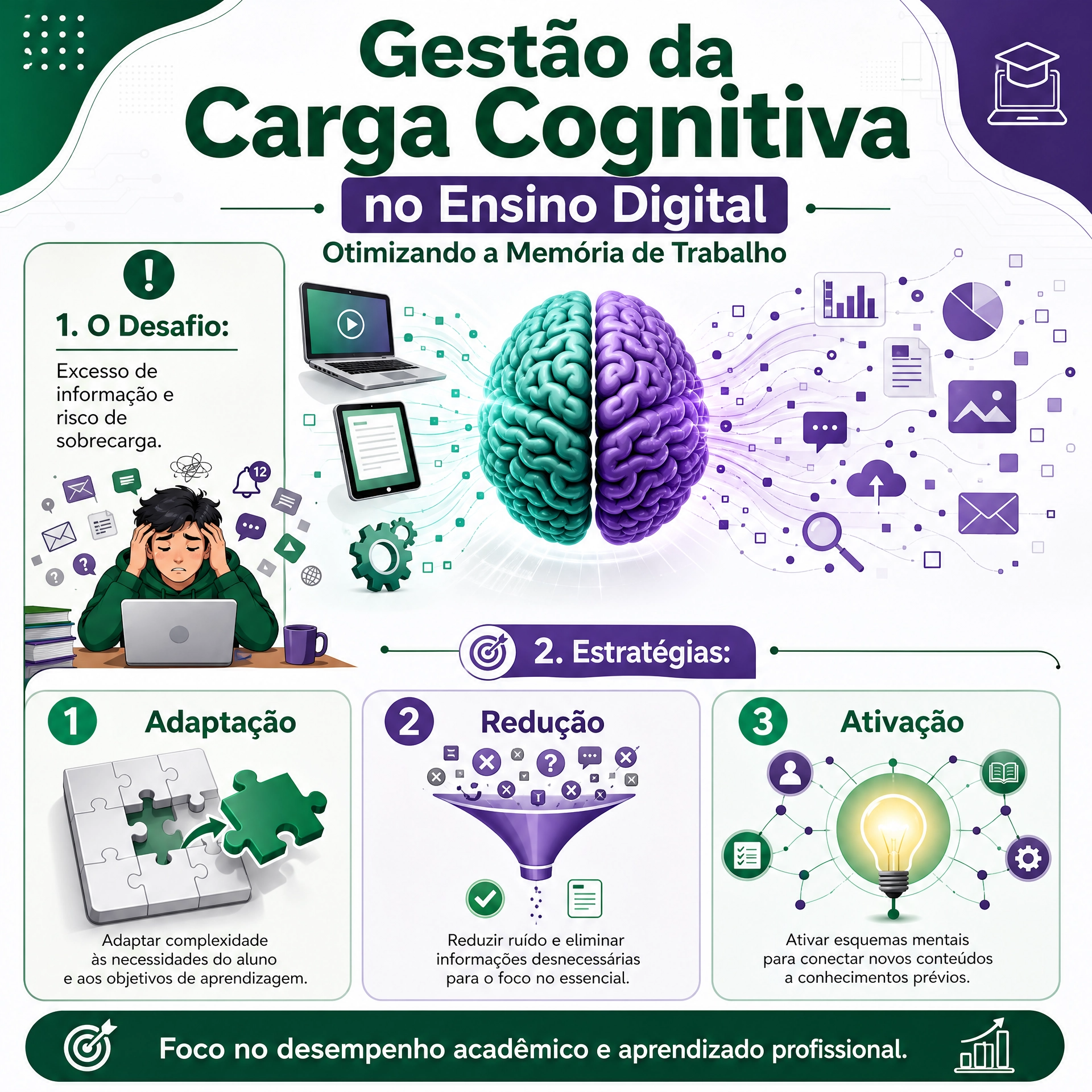
In the context of digitalization in higher education, students are required to process increasingly complex information in limited time, which intensifies the risk of cognitive overload. This conceptual-analytical study examines cognitive load control as a pedagogical mechanism for regulating working memory and supporting cognitive flexibility among university students. The study is based on Cognitive Load Theory and a synthesis of recent literature on digital didactics, instructional design, motivation, and professional training. The methodological approach is literature-based; no direct experiment or survey sample was used. The analysis distinguishes literature-derived theoretical assumptions from the article’s own synthesis of pedagogical implications. The results show that effective cognitive load control depends on three complementary actions: adapting task complexity to students’ prior knowledge, reducing extraneous information, and activating meaningful schema construction through multimodal and professionally oriented tasks. The article contributes by systematizing practical instructional strategies and by clarifying how cognitive load management can support academic performance and professional learning in digital environments.
Downloads
References
Azarenko, N. (2024, March 1). Chto nuzhno znat' o teorii kognitivnoy nagruzki vsem, kto uchitsya i mnogo rabotayet s informatsiyey [What everyone who studies and works a lot with information needs to know about cognitive load theory]. Unisender Blog. https://www.unisender.com/ru/blog/chto-nuzhno-znat-o-teorii-kognitivnoj-nagruzki/
Aziyev, A., Shalgynbayeva, K., Aitysheva, A., & Alpyssov, A. (2024). Impact of psychological training on the development of professionally important qualities of an educational psychologist. European Journal of Contemporary Education, 13(1), 5–13. https://doi.org/10.13187/ejced.2024.1.5
Belousova, N., Mamylina, N., Korchemkina, Y., Kovtun, R., & Bolshakova, Z. (2023). Turismo deportivo y estado psicofisiológico de los estudiantes. Interacción y Perspectiva, 13(2), 232–242. https://doi.org/10.5281/zenodo.7812202
Bozhkova, G., Ganova, T., Saltykova, G., Khakimov, N., & Stepanova, D. (2025). Uso de los teléfonos inteligentes para mejorar la participación cognitiva creativa en el aprendizaje estudiantil: Un estudio de caso. Interacción y Perspectiva, 15(1), 75–86. https://doi.org/10.5281/zenodo.14031077
Chicherina, N. V., & Wang, L. (2023). Metody i priyemy upravleniya kognitivnoy nagruzkoy v protsesse obucheniya [Methods and techniques for managing cognitive load in the learning process]. Teaching Methodology in Higher Education, 12(4), 8–16. https://doi.org/10.57769/2227-8591.12.4.01
Goncharenko, O., & Semenkova, S. (2023). Development of the natural science cycle of disciplines in modern education based on the ideas of the Russian silver age pedagogues. Conrado, 19(95), 254–259.
Goryushko, S. M., & Samochadin, A. V. (2018). Sredstva otsenki urovnya kognitivnoy nagruzki v protsesse obucheniya [Tools for cognitive load evaluation in the education process]. Computer Tools in Education, (4), 35–44. https://doi.org/10.32603/2071-2340-4-35-44
Kabzhanova, G., Aubakirova, R., Belenko, O., & Tursungozhinova, G. (2024). Designing effective pedagogical strategies for fostering meta-competence using smart resources in language training. European Journal of Contemporary Education, 13(1), 54–66. https://doi.org/10.13187/ejced.2024.1.54
Klaess, J. (2019, July 29). Kognitive Belastung in der Fertigung: Wie Augmentation die Entscheidungsfindung verbessern kann [Cognitive load in manufacturing: How augmentation can improve decision making]. Tulip Blog. https://tulip.co/de/blog/cognitive-load-in-manufacturing/
Ling, P., Kamasheva, M., Ilina, M., Kozachek, A., Zakirzyanov, A., & Shafazhinskaya, N. (2023). Influence of modern classroom management technologies on improving the activities of class teachers. Conrado, 19(95), 480–486.
Mukhametkairov, A., Matayev, B., Matayeva, A., & Fominykh, N. (2024). Impact of utilizing the project method in the school educational environment on the development of soft skills in high school students. European Journal of Contemporary Education, 13(1), 162–171. https://doi.org/10.13187/ejced.2024.1.162
Muskhanova, I., & Avtaeva, T. (2023). El aspecto histórico de los concursos de excelencia pedagógica. Interacción y Perspectiva, 13(1), 17–27. https://doi.org/10.5281/zenodo.7382683
Polozhentseva, I., Vaslavskaya, I., Vasyukov, V., & Nesova, N. (2024). Possibilities of application of adaptive knowledge testing using artificial neural networks in training economics students. European Journal of Contemporary Education, 13(3), 589–597. https://doi.org/10.13187/ejced.2024.3.589
Rodríguez, E. M. (2023, April 14). John Swellers Theorie der kognitiven Belastung [John Sweller's theory of cognitive load]. Gedankenwelt. https://gedankenwelt.de/john-swellers-theorie-der-kognitiven-belastung/
Starostenkov, N. (2022). Directions of activities of the scientific and pedagogical community in the Russian Federation in the current conditions. Revista on Line de Política e Gestão Educacional, 26, e022153. https://doi.org/10.22633/rpge.v26i00.17345
Tutkova, I., Anufriev, A., Kudaiberdieva, G., & Kozhobekov, K. (2024). Training of pedagogical staff in the context of digital didactics. Conrado, 20(96), 279–283.
Ukolova, L., Nizamutdinova, S., Kudrinskaia, I., Kabkova, E., & Antonova, M. (2024). History of the development of the religious direction of pedagogy: The influence of spiritual and moral upbringing on the development of schoolchildren’s personality. Conrado, 20(S1), 191–197.
Ukolova, L. I., & Afanasyev, V. V. (2023). Pedagogicheskiy potentsial primeneniya komp'yuternykh obrazovatel'nykh programm na urokakh izobrazitel'nogo iskusstva [Pedagogical potential of the application of computer educational programs in the lessons of fine arts]. Anthropological Didactics and Upbringing, 6(1), 21–30.
Zhukova, T., Bryndina, V., Dronova, S., Klimova, I., Kozlovtseva, N., & Glushkova, N. (2025). Competencia intercultural en la educación universitaria: Enfoques prácticos para formar futuros especialistas. Interacción y Perspectiva, 15(1), 123–138. https://doi.org/10.5281/zenodo.14031239
Downloads
Published
How to Cite
Issue
Section
License
Copyright (c) 2026 Revista on line de Política e Gestão Educacional

This work is licensed under a Creative Commons Attribution-NonCommercial-ShareAlike 4.0 International License.
Manuscritos aceitos e publicados são de propriedade da Revista on line de Política e Gestão Educacional. É vedada a submissão integral ou parcial do manuscrito a qualquer outro periódico. A responsabilidade do conteúdo dos artigos é exclusiva dos autores. É vedada a tradução para outro idioma sem a autorização escrita do Editor ouvida a Comissão Editorial Científica.