El impacto del agotamiento emocional, el estrés y la agresión en el rendimiento académico de estudiantes universitarios
DOI:
https://doi.org/10.22633/rpge.v30iesp1.20906Palabras clave:
Agotamiento emocional, Agresividad, Estrés, Salud emocional, Comportamiento agresivoResumen
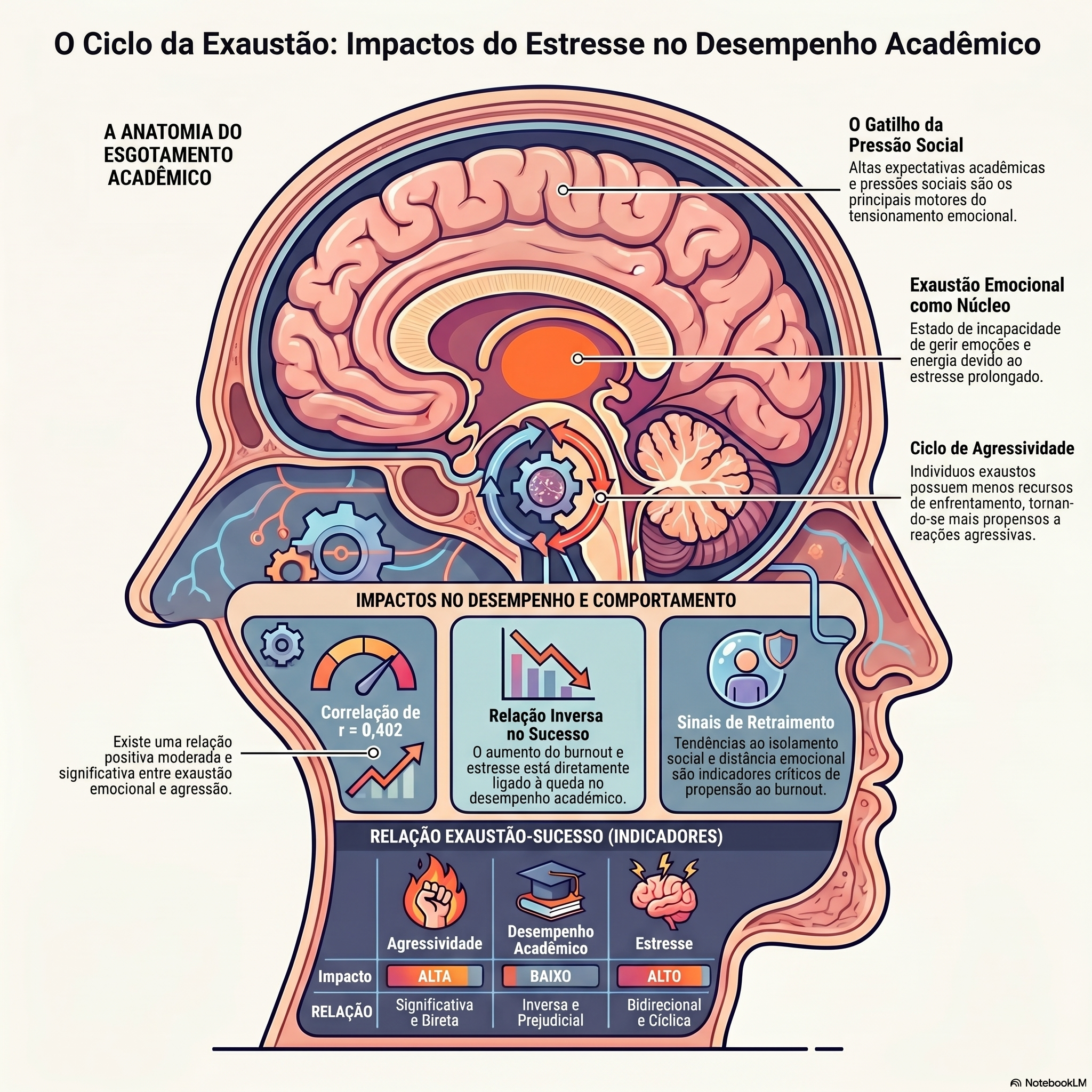
El estudio se dedicó al análisis de la influencia de la agresión y los factores de estrés en la perspectiva del agotamiento emocional en el desarrollo del rendimiento académico en la educación superior. Los resultados indicaron que el desarrollo contemporáneo del entorno educativo, caracterizado por el aumento de las presiones académicas y sociales, tiende a incrementar la incidencia del agotamiento emocional, lo que, a su vez, contribuye a una mayor frecuencia de comportamientos agresivos y niveles de estrés. El estudio reveló una correlación moderada entre el agotamiento emocional y la agresión, lo que indica que, a medida que aumenta el nivel de agotamiento emocional, los estudiantes tienden a mostrar comportamientos más agresivos. Los resultados obtenidos pueden ayudar a las instituciones educativas a proporcionar un mejor apoyo emocional a los estudiantes y a desarrollar estrategias para prevenir comportamientos agresivos. Con base en estos hallazgos, se concluye que las personas que muestran tendencia al retraimiento emocional, al aislamiento y al distanciamiento social presentan mayores niveles de estrés y una mayor propensión al agotamiento. Este aspecto debe ser considerado.
Descargas
Citas
Aliyeva, K., Aliyeva, T., Jabbarov, R., & Mammadli, I. (2021). Students’ values and their mental health during the pandemic. Propósitos y Representaciones, 9(3), 1183. http://dx.doi.org/10.20511/pyr2021.v9nSPE3.1183
Baron, R. A., & Neuman, J. H. (1996). Workplace violence and workplace aggression: Evidence on their relative frequency and potential causes. Aggressive Behavior, 22(3), 161–173. https://doi.org/10.1002/(SICI)1098-2337(1996)22:3<161::AID-AB1>3.0.CO;2-Q
Buchanan, C., & Consedine, N. S. (2019). The cycle of burnout and aggression in higher education. Psychological Studies Journal, 34(3), 120.
Boyko, V. V. (1999). The syndrome of “emotional burnout” in professional communication. Sudarynya.
Chen, S., et al. (2020). Emotional exhaustion in healthcare students: An aggression perspective. Health Psychology Review, 16(1), 260.
Cordes, C. L., & Dougherty, T. W. (1993). A review and an integration of research on job burnout. Academy of Management Review, 18(4), 621–656. https://doi.org/10.2307/258593
Dyatlov, D. S. (2020). Assessment of the prevalence of emotional burnout syndrome among student youth. Student Bulletin, 37–2(135), 6–8.
Freudenberger, H. J. (1974). Staff burnout. Social Issues, 30, 159–165.
García, J. (2021). Stress levels and aggression: An analysis among students. Psychological Research Journal, 45(1), 44.
Gonzalez, R. (2010). Workplace aggression and burnout: Implications for university students. Psychological Science, 21(2), 30.
Hakanen, J. J. (2006). Burnout and aggression in workplace settings. Journal of Occupational Health Psychology, 11(2), 221.
Harris, M. (2018). Examining social support to alleviate burnout-induced aggression. Journal of Higher Education Psychology, 42(2), 98.
Jabbarov, R., Mustafayev, M., Aliyev, J., Nasibova, U., & Bayramov, M. (2023). Psychological issues of the relationship between self-esteem and aggression in students studying in different faculties. Revista de Gestão e Secretariado, 14(10), 17236–17253. https://doi.org/10.7769/gesec.v14i10.2773
Jabbarov, R. V. (2020). Mechanisms of socio-psychological adaptation of refugees. Journal of Interdisciplinary Debates, 1(1).
Kabat-Zinn, J. (1990). Full catastrophe living: Using the wisdom of your body and mind to face stress, pain and illness. Delacorte.
Lee, R. T., & Ashforth, B. E. (1996). Organizational burnout and aggressive behavior. Human Relations, 49(3), 362.
Maslach, C. (1982). Burnout: The cost of caring. Prentice-Hall.
Maslach, C. (2000). A multidimensional theory of burnout. In C. L. Cooper (Ed.), Theories of organizational stress. Oxford University Press.
Maslach, C., & Leiter, M. P. (1997). The truth about burnout: How organizations cause personal stress and what to do about it. Jossey-Bass.
Maslach, C., & Leiter, M. P. (2016). Understanding the burnout experience: Recent research and its implications for psychiatry. World Psychiatry, 15, 103–111. https://doi.org/10.1002/wps.20311
Maltseva, S. M. (2020). Causes and prevention of emotional burnout syndrome in students. Azimuth of Scientific Research: Pedagogy and Psychology, 9(2), 348–350.
Muftakhova, F. S. (2009). Studying the problem of emotional burnout syndrome and coping behavior in stressful situations. Bulletin of Bashkir University, 14(1), 290–293.
Park, E. (2021). Examining burnout and aggression as interlinked variables. International Journal of Stress Management, 19(4), 143.
Pines, A. M. (2004). Burnout as an interpersonal phenomenon. Journal of Social and Clinical Psychology, 11(3), 55.
Pines, A., & Aronson, E. (1988). Career burnout: Causes and cures. Free Press.
Roth, W. (2014). Emotional exhaustion and aggression in university students. European Journal of Psychology of Education, 29(2), 44.
Salmela-Aro, K. (2009). Emotions in adolescence: Examining burnout and aggression. Journal of Youth Studies, 12(4), 315.
Savelyeva, L. A. (2022). Predictors of emotional burnout at different levels of higher medical education. Prospects of Science and Education, 2(56), 460–477.
Schaufeli, W. B. (2009). Describing aggression and burnout: Implications for university settings. Journal of Organizational Behavior, 30(7), 56.
Schaufeli, W. B., & Bakker, A. B. (2004). Job demands, job resources, and their relationship with burnout and engagement: A multi-sample study. Journal of Organizational Behavior, 25(3), 293–315. https://doi.org/10.1002/job.248
Sergeeva, I. A. (2020). Manifestation of symptoms of emotional burnout in students in the context of distance learning. International Journal of Humanities and Natural Sciences, 12–1(51), 96–100.
Taris, T. W., Peeters, M. C. W., Le Blanc, P. M., Schreurs, P. J. G., & Schaufeli, W. B. (2001). Burnout and job stress in Dutch teachers. Journal of Occupational Health Psychology.
Vokhrina, A. V. (2022). The phenomenon of emotional burnout in psychological research. Bulletin of Science, 4(3), 222–230.
Vodopyanova, N. E., & Starchenkova, E. S. (2008). Burnout syndrome: Diagnosis and prevention (2nd ed.). Peter.
Descargas
Publicado
Cómo citar
Número
Sección
Licencia
Derechos de autor 2026 Revista on line de Política e Gestão Educacional

Esta obra está bajo una licencia internacional Creative Commons Atribución-NoComercial-CompartirIgual 4.0.
Manuscritos aceitos e publicados são de propriedade da Revista on line de Política e Gestão Educacional. É vedada a submissão integral ou parcial do manuscrito a qualquer outro periódico. A responsabilidade do conteúdo dos artigos é exclusiva dos autores. É vedada a tradução para outro idioma sem a autorização escrita do Editor ouvida a Comissão Editorial Científica.