Enseñanza del estilo de vida de los estudiantes, con énfasis en el pensamiento de Ho Chi Minh para aumentar la responsabilidad social
DOI:
https://doi.org/10.22633/rpge.v30iesp1.20940Palabras clave:
Educación, Estilo de vida, Estudiantes, Responsabilidad social, Ho Chi MinhResumen
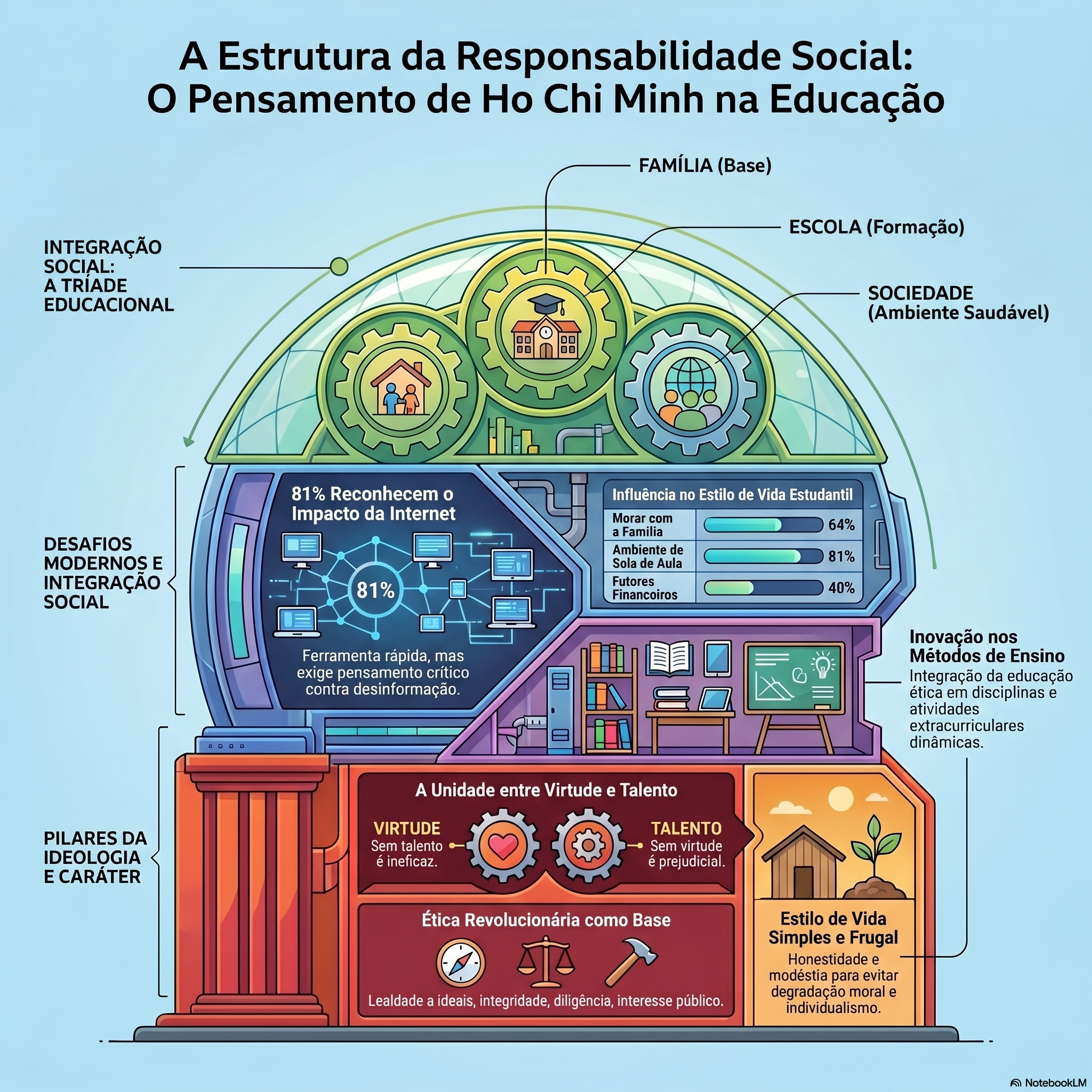
Este estudio examina el papel de la ideología de Ho Chi Minh en la educación del estilo de vida de los estudiantes y en el fortalecimiento de la responsabilidad social. La investigación emplea un enfoque combinado cualitativo y cuantitativo, apoyado en métodos como análisis y síntesis, investigación lógico-histórica y técnicas comparativas. Los resultados indican que la ideología de Ho Chi Minh desempeña un papel significativo en la formación de valores morales, la construcción del carácter y el desarrollo de comportamientos responsables entre los jóvenes vietnamitas, además de orientar la adecuación de los estilos de vida a las condiciones del desarrollo nacional. El estudio también destaca la necesidad urgente de aumentar la conciencia e innovar los métodos educativos para mejorar la eficacia de la educación en estilo de vida y responsabilidad social. Escuelas, docentes, estudiantes y familias son identificados como actores clave en este proceso.
Descargas
Citas
Al-Awwad, N. J., Al-Sayyed, H. F., Zeinah, Z. A., & Tayyem, R. F. (2021). Dietary and lifestyle habits among university students at different academic years. Clinical Nutrition ESPEN, 44, 236–242. https://doi.org/10.1016/j.clnesp.2021.06.010
Alves, M., Asbell, P., Dogru, M., Giannaccare, G., Grau, A., Gregory, D., ... & Stapleton, F. (2023). TFOS lifestyle report: Impact of environmental conditions on the ocular surface. The Ocular Surface, 29, 1–52. https://doi.org/10.1016/j.jtos.2023.04.007
Bagherzadeh, R., Gharibi, T., Safavi, B., Mohammadi, S. Z., Karami, F., & Keshavarz, S. (2021). Pregnancy: An opportunity to return to a healthy lifestyle: A qualitative study. BMC Pregnancy and Childbirth, 21(1), 751. https://doi.org/10.1186/s12884-021-04213-6
Bonneau, C., & Aroles, J. (2021). Digital nomads: A new form of leisure class? In Cambridge University Press. https://doi.org/10.1017/9781108865814.011
Bowden, B. (2022). Introduction: Civilization and lived experience. In Slavery, freedom and business endeavor: The reforging of Western civilization and the transformation of everyday life (pp. 1–44). Springer International Publishing. https://doi.org/10.1007/978-3-030-97232-5_1
Chan, G., Huo, Y., Kelly, S., Leung, J., Tisdale, C., & Gullo, M. (2022). The impact of eSports and online video gaming on lifestyle behaviours in youth: A systematic review. Computers in Human Behavior, 126, 106974. https://doi.org/10.1016/j.chb.2021.106974
Cowan, S., Lim, S., Alycia, C., Pirotta, S., Thomson, R., Gibson-Helm, M., ... & Moran, L. (2023). Lifestyle management in polycystic ovary syndrome: Beyond diet and physical activity. BMC Endocrine Disorders, 23(1), 14. https://doi.org/10.1186/s12902-022-01208-y
Darmostuk, V., & Flakus, A. (2024). First molecular evidence of lichen-inhabiting Acrospermum and new insights into the evolution of lifestyles of Acrospermales (Dothideomycetes). Mycologia, 116(1), 17–30. https://doi.org/10.1080/00275514.2023.2264131
Dewar, A. E., Hao, C., Belcher, L. J., Ghoul, M., & West, S. A. (2024). Bacterial lifestyle shapes pangenomes. Proceedings of the National Academy of Sciences, 121(21), e2320170121. https://doi.org/10.1073/pnas.2320170121
Donoso, F., Cryan, J. F., Olavarría‐Ramírez, L., Nolan, Y. M., & Clarke, G. (2023). Inflammation, lifestyle factors, and the microbiome–gut–brain axis: Relevance to depression and antidepressant action. Clinical Pharmacology & Therapeutics, 113(2), 246–259. https://doi.org/10.1002/cpt.2581
Dung, V. V., Minh, T. N., & Dinh, D. Q. (2023). A influência da alienação do trabalho no desenvolvimento sustentável no Vietnã a partir de uma perspectiva filosófica de Karl Marx. Synesis, 16(1), 212–226. https://seer.ucp.br/seer/index.php/synesis/article/view/2897
Dung, V. V., Tung, D. T., & Na, P. T. A. (2023). Phan Chu Trinh’s ideology on national self. International Journal of Religion, 4(2), 147–157. https://doi.org/10.61707/e7p63m21
Ee, C., Pirotta, S., Mousa, A., Moran, L., & Lim, S. (2021). Providing lifestyle advice to women with PCOS: An overview of practical issues affecting success. BMC Endocrine Disorders, 21, 1–12. https://doi.org/10.1186/s12902-021-00890-8
Folke, C., Polasky, S., Rockström, J., Galaz, V., Westley, F., Lamont, M., ... & Walker, B. H. (2021). Our future in the Anthropocene biosphere. Ambio, 50, 834–869. https://doi.org/10.1007/s13280-021-01544-8
Kabir, M., Habiba, U. E., Khan, W., Shah, A., Rahim, S., De los Rios-Escalante, P. R., ... & Shafiq, M. (2023). Climate change due to increasing concentration of carbon dioxide and its impacts on environment in 21st century: A mini review. Journal of King Saud University – Science, 35(5), 102693. https://doi.org/10.1016/j.jksus.2023.102693
Klein, A. P. (2021). Pancreatic cancer epidemiology: Understanding the role of lifestyle and inherited risk factors. Nature Reviews Gastroenterology & Hepatology, 18(7), 493–502. https://doi.org/10.1038/s41575-021-00457-x
Lesińska-Sawicka, M., Pisarek, E., & Nagórska, M. (2021). The health behaviours of students from selected countries: A comparative study. Nursing Reports, 11(2), 404–417. https://doi.org/10.3390/nursrep11020039
Lindell, J., Jansson, A., & Fast, K. (2022). I’m here! Conspicuous geomedia practices and the reproduction of social positions on social media. Information, Communication & Society, 25(14), 2063–2082. https://doi.org/10.1080/1369118X.2021.1925322
Lubowiecki-Vikuk, A., Dąbrowska, A., & Machnik, A. (2021). Responsible consumer and lifestyle: Sustainability insights. Sustainable Production and Consumption, 25, 91–101. https://doi.org/10.1016/j.spc.2020.08.007
Masclet, O. (2022). Introduction: Subalterns in a ‘society of the similar’: A study of the lifestyles of the stable-modest fractions of the contemporary working classes. In Subaltern workers in contemporary France (pp. 1–28). Routledge. https://doi.org/10.4324/9781003330073
Maximova, K., Khan, M. K., Dabravolskaj, J., Maunula, L., Ohinmaa, A., & Veugelers, P. J. (2022). Perceived changes in lifestyle behaviours and in mental health and wellbeing of elementary school children during the first COVID-19 lockdown in Canada. Public Health, 202, 35–42. https://doi.org/10.1016/j.puhe.2021.10.007
Meng, Y., & Dai, J. (2023). Ding Ling: Vulnerable “goddess”. In Emerging from the horizon of history: Modern Chinese women’s literature, 1917–1949 (pp. 163–183). Springer Nature Singapore. https://doi.org/10.1007/978-981-99-4004-2_8
Moniz Vieira, R. (2022). The tourism and lifestyle mobilities of the Madeiran community in the Channel Island of Jersey (Doctoral dissertation). https://doi.org/10.17869/ENU.2022.2952343
Novitasari, D., Juliana, J., Asbari, M., & Purwanto, A. (2021). The effect of financial literacy, parents’ social economic and student lifestyle on students’ personal financial management. Economic Education Analysis Journal, 10(3), 522–531. https://doi.org/10.15294/eeaj.v10i3.50721
Phuong, V. T., & Dung, V. V. (2023). Linguagem – ferramentas da luta social no pensamento filosófico de Vladimir Ilyich Lenin. Synesis, 15(2), 389–402. https://seer.ucp.br/seer/index.php/synesis/article/view/2563
Rojas‐Carvajal, M., Sequeira‐Cordero, A., & Brenes, J. C. (2022). The environmental enrichment model revisited: A translatable paradigm to study the stress of our modern lifestyle. European Journal of Neuroscience, 55(9–10), 2359–2392. https://doi.org/10.1111/ejn.15160
Ruziyev, K. T., Klebleyeva, G. D., Axmedova, M. M., & Abdullaev, X. D. (2024). Promoting a well-rounded lifestyle for school kids and college students. Golden Brain, 2(5), 134–139.
Santos, L. (2022). The impact of nutrition and lifestyle modification on health. European Journal of Internal Medicine, 97, 18–25. https://doi.org/10.1016/j.ejim.2021.09.020
Sarikhani, Y., Ghahramani, S., Bayati, M., Lotfi, F., & Bastani, P. (2021). A thematic network for factors affecting the choice of specialty education by medical students: A scoping study in low- and middle-income countries. BMC Medical Education, 21, 1–12. https://doi.org/10.1186/s12909-021-02539-5
Szymborska, H., & Toporowski, J. (2022a). Industrial feudalism and wealth inequalities. Institute for New Economic Thinking Working Paper Series (174). https://papers.ssrn.com/sol3/papers.cfm?abstract_id=4023748
Szymborska, H., & Toporowski, J. (2022b). Industrial feudalism and the distribution of wealth. In Polish Marxism after Luxemburg (pp. 61–75). Emerald Publishing Limited. https://doi.org/10.1108/S0161-723020220000037005
Uddin, M. Z., & Soylu, A. (2021). Human activity recognition using wearable sensors, discriminant analysis, and long short-term memory-based neural structured learning. Scientific Reports, 11(1), 16455. https://doi.org/10.1038/s41598-021-95947-y
Van Dung, V., Hoa, L. M., & Quyet, L. V. (2023). The contribution of Ho Chi Minh in building the ideas of Vietnamese today students. Journal of Educational and Social Research, 13(1), 175. https://doi.org/10.36941/jesr-2023-0016
Van Dung, V. (2023). La construcción de la benevolencia popular para los estudiantes vietnamitas basada en el pensamiento filosófico de Ho Chi Minh. REDHECS: Revista Electrónica de Humanidades, Educación y Comunicación Social, 31(22), 76–94.
Van Dung, V., & Nhat Minh, T. (2023). Sea and island economy development with environmental protection in Nha Trang city, Khanh Hoa province. Nexo Revista Científica, 36(4), 609–623. https://doi.org/10.5377/nexo.v36i04.16788
Veleva, V. (2021). The role of entrepreneurs in advancing sustainable lifestyles: Challenges, impacts, and future opportunities. Journal of Cleaner Production, 283, 124658. https://doi.org/10.1016/j.jclepro.2020.124658
Vo, P., & Dung, V. V. (2024). The role of language in the development of social consciousness in Karl Marx’s philosophy. Kalagatos, 21(1), eK24005. https://revistas.uece.br/index.php/kalagatos/article/view/12308
Yang, Q. (2022). Social transformation in large Chinese cities. In Gentrification in Chinese cities: State institutions, space and society (pp. 31–51). Springer Nature Singapore. https://doi.org/10.1007/978-981-19-2286-2_2
Zhou, X., Zhou, X., Wang, C., & Zhou, H. (2023). Environmental and human health impacts of volatile organic compounds: A perspective review. Chemosphere, 313, 137489. https://doi.org/10.1016/j.chemosphere.2022.137489
Descargas
Publicado
Cómo citar
Número
Sección
Licencia
Derechos de autor 2026 Revista on line de Política e Gestão Educacional

Esta obra está bajo una licencia internacional Creative Commons Atribución-NoComercial-CompartirIgual 4.0.
Manuscritos aceitos e publicados são de propriedade da Revista on line de Política e Gestão Educacional. É vedada a submissão integral ou parcial do manuscrito a qualquer outro periódico. A responsabilidade do conteúdo dos artigos é exclusiva dos autores. É vedada a tradução para outro idioma sem a autorização escrita do Editor ouvida a Comissão Editorial Científica.